
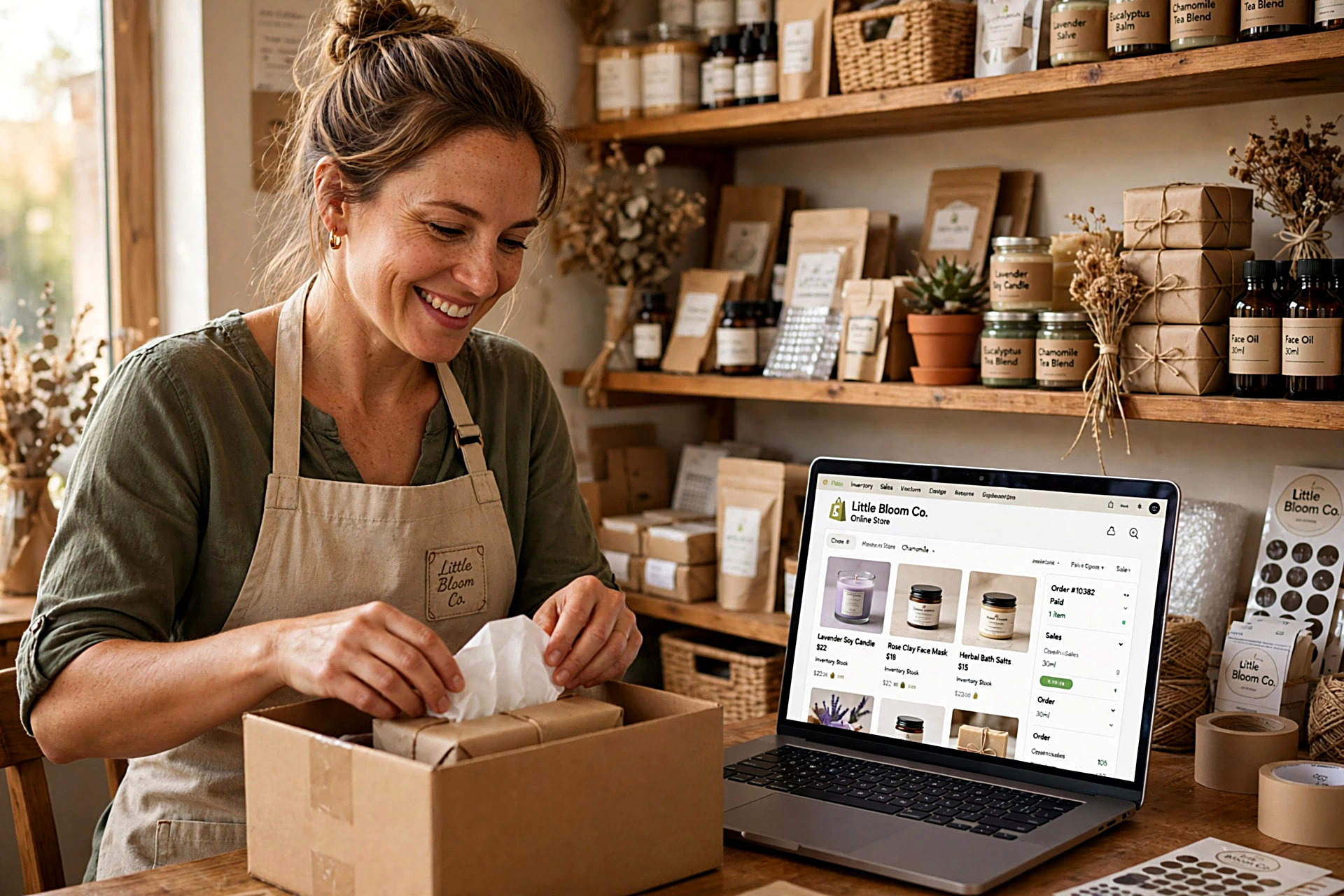
Local Biz Engine builds custom-coded e-commerce websites for businesses nationwide that want to sell products online, from a handful of items to a full catalog. It is for local shops, service companies with products to sell, restaurants with merchandise, and makers who are tired of taking orders by DM or phone. To get started, send a request and we will build a free preview of your new homepage before you pay anything.
Maybe your orders arrive as Instagram messages, texts, and handwritten notes. Maybe you sell on a marketplace and hand a slice of every sale to someone else's platform, while your own website is just a brochure. Customers ask whether you ship, whether an item is in stock, or how to pay, and you answer the same questions every day. An online store takes those repeat questions off your plate and lets people buy while you are busy doing the work you actually do.
Signs you need a store
Most owners reach this point gradually. If a few of these sound familiar, your website is probably costing you sales:
- Customers call or message to ask what you have and what it costs.
- You take payments by hand, by invoice, or through apps that are not tied to an order record.
- You track inventory in a notebook or spreadsheet and sometimes sell something you no longer have.
- Your products only exist on social media posts that scroll out of view in a day.
- You want to offer local pickup or delivery but have no clean way to take those orders.
What the build covers
A store is more than a website with a cart bolted on. Here is what an e-commerce build typically includes and how we approach each part.
Product pages and catalog
Every product needs its own page with clear photos, a plain description, options such as size or color, and a visible price. Categories should match how your customers shop, not how your storeroom is organized. Good product pages also give search engines something specific to show when people look for what you sell.
Cart and checkout
The checkout is where sales are won or lost. It should be short, work well on a phone, and show shipping, pickup, and tax details before the customer commits. Payment settings, shipping options, and order notifications are set up around the way you actually sell.
Beyond those two pieces, a typical build also covers:
- A custom-designed homepage and supporting pages such as About, Shipping and Returns, and Contact
- Mobile-friendly layouts, since many shoppers browse from their phones
- On-page SEO setup so your products and pages can be found
- Hosting, security, updates, and support as part of your monthly plan
Store or regular website?
People often mix these up, so here is the difference. A regular business website explains what you do and gets people to call or fill out a form. An e-commerce website lets people choose products, pay, and place an order without talking to you first.
If you only want leads for a service, a standard website or a landing page may fit better, and those are separate services we can talk through with you. This page covers the online store itself. Running ads, sending email campaigns, and managing social media to bring shoppers to the store are add-on services, so ask us if you want them alongside the build.
How we work with you
- Free homepage preview. You tell us what you sell and we build a preview of your new homepage. You see it before you pay anything.
- Plan and scope. We talk about your products, how you want to take orders, and what the store needs to do on day one.
- Build and review. We code the site and you review the pages, product layout, and checkout flow.
- Launch and support. Your plan is month-to-month with no hidden fees and no long-term contract, and it includes hosting, security, updates, and support.
Throughout, you talk directly to the owner who built your site, not a ticket queue.
Selling from anywhere
Many areas have a strong seasonal rhythm. Summer visitors, year-round residents, and the large military community all shop differently, and many local businesses see their busiest stretches around the warm months and holidays. A store should be ready for those peaks, with clear pickup and shipping details and product pages that are easy to update when stock changes.
Local search matters too. Shoppers often search for what they want plus a city name, so your store pages should say clearly where you are and who you serve. If you want ongoing help getting found, Local SEO and Google Business Profile management are available as add-ons.
How it should be done
Whoever builds your store, here are standards you can use to judge the work:
- Fast on a phone. Test it yourself on your own phone, on mobile data, and see how long a product page takes to appear.
- Simple checkout. Fewer steps and fewer required fields mean fewer abandoned carts. Try buying something yourself before launch.
- Easy updates. You should be able to change prices, mark items sold out, and add products without calling a developer each time.
- Honest product pages. Real photos, clear sizes and details, and visible shipping and return terms build trust.
- Test orders before launch. Every payment, confirmation, and notification should be checked end to end.
What affects the cost
Store pricing depends on scope, so be wary of any number quoted before someone asks what you sell. The main factors are:
- How many products you have and how many options each one carries
- Whether you ship, offer local pickup, deliver, or all three
- How much content needs to be written, photographed, or organized
- Custom design needs and any special features you want at checkout
- Whether you add services such as SEO, email marketing, or ad management
A clear written quote should spell out what is included, what the monthly plan covers, which extras cost more, and how changes are handled once the build is underway. If something is vague on paper, ask before you sign anything.
Questions to ask first
Before hiring anyone to build your store, ask:
- Will I see a design or preview before I pay?
- What exactly is included in the build and in the monthly fee, and what costs extra?
- Who owns the site, the product content, and the customer data if I decide to leave?
- Who will I talk to when I need a change or run into a problem, and how do you communicate?
- Are there contracts or setup fees, and how do I cancel?
- Will I be able to add and edit products myself?
Common questions
How long does it take to build an online store?
It depends mainly on how many products you have and how much content is ready. A small catalog with good photos moves faster than a large one that needs organizing. We start with the homepage preview, then talk through the scope.
How is the price worked out?
The price follows the size of the catalog, how orders are fulfilled, the design work involved, and any add-on services. We scope those items with you and put them in a written quote, so you know what you are paying for.
Can I offer local pickup for my customers?
Yes, that is a common setup for local businesses. Pickup, local delivery, and shipping can be presented as separate options at checkout so customers choose what suits them.
Will I be able to update products myself?
Most owners want to manage prices, stock, and new items on their own. We set the store up around that and can talk through what you want to handle yourself and what you want us to handle.
Am I locked into a contract?
No. Plans are month-to-month, with no hidden fees and no long-term contract. Hosting, security, updates, and support are part of the plan.
Will people find my store on Google?
The build includes on-page SEO setup, which gives your pages a solid starting point. Ranking takes more than a launch, so ongoing Local SEO is available as an add-on if you want help competing for local searches.
Ready to see what your store could look like? Call or send a request, and we will start your free homepage preview.